
 Türkçe
 Deutsch
 Français
Even with a healthy diet and regular exercise, stubborn pockets of fat in certain areas of the body can resist all efforts to reduce them. This is largely determined by genetics and is not something a person can overcome through lifestyle changes alone. By 2026, liposuction techniques have advanced significantly, with minimally invasive methods, laser-assisted systems and ultrasound technology making the procedure safer, more effective and faster to recover from than ever before. In this comprehensive guide, we explain exactly how liposuction works, which techniques are available and what you need to know before and after surgery. Visit our EFC Clinic liposuction page for more detailed information.
What Is Liposuction?
Liposuction is a surgical body contouring procedure in which stubborn localised fat deposits — resistant to diet and exercise — are permanently removed from the body using specialised cannulas. Its primary goal is not weight loss but rather reshaping and improving body proportions. The fat cells removed during the procedure do not return, making the results long-lasting.
Liposuction is not a weight-loss solution. The ideal candidate is someone in good general health, close to their target weight, with specific areas of excess fat that do not respond to lifestyle changes. EFC Clinic’s specialist plastic surgeons assess each patient’s individual anatomy during consultation and build a fully personalised treatment plan.
Liposuction Techniques
Tumescent Liposuction
The most widely used foundational technique. A tumescent solution (saline + adrenaline + local anaesthetic) is injected into the target area. This swells the fat cells, minimises bleeding and numbs the region. Fat is then aspirated through thin cannulas. It is a safe, proven and widely established standard of care.
Vaser Liposuction (Ultrasound-Assisted)
Vaser technology uses ultrasonic sound waves to selectively break apart fat cells without damaging surrounding tissue, blood vessels or nerves. This makes fat far easier to aspirate, reduces tissue trauma and speeds healing. It is particularly preferred for fibrous areas (back, male chest) and high-definition body contouring (hi-def liposuction).
Laser Liposuction (Laser-Assisted)
Laser liposuction uses laser energy to liquefy fat cells while simultaneously stimulating sub-dermal collagen production. This dual effect not only facilitates fat removal but also contributes to skin tightening after the procedure — ideal for smaller areas and cases accompanied by mild skin laxity.
Hi-Def (High-Definition) Liposuction
An advanced technique designed to accentuate muscle definition. Hi-def liposuction, typically performed with Vaser technology, sculpts the abdominal muscles (six-pack appearance), chest and arm contours. It is ideal for individuals with a low body fat percentage who are seeking an athletic, defined physique.
Treatment Areas
Liposuction can be applied to many areas of the body:
- Abdomen and waist: The most commonly treated area — stubborn belly fat and love handles.
- Hips and buttocks: Hip-area fat that disrupts body proportions.
- Inner and outer thighs: Saddlebags and inner thigh fat.
- Upper arms: The inner arm fat that creates a flabby appearance.
- Back and bra line: Fat rolls along the bra strap line.
- Under the chin and neck: Double chin and neck fat.
- Male chest (gynaecomastia): Excess fat causing breast enlargement in men.
- Calves and ankles: Fat around the knees, calves and ankles.
Multiple areas can be treated simultaneously in a single operation. Learn more about liposuction treatment areas on our dedicated page.
Step-by-Step: The Liposuction Procedure
Step 1: Consultation and Planning
A successful liposuction outcome begins with a thorough pre-operative assessment. The surgeon evaluates the target areas, skin quality, fat distribution and overall health status. Body analysis and pre-operative photographs are taken; realistic expectations are established. Book a free consultation via our contact page.
Step 2: Anaesthesia
Liposuction can be performed under local anaesthesia, sedation or general anaesthesia depending on the size of the area and the technique used. Small single-area procedures may be performed under local anaesthesia; multi-area operations typically require general anaesthesia.
Step 3: Small Incision and Cannula Insertion
A tiny incision of just 2–4 mm is made in the target area — virtually invisible once healed. Depending on the chosen technique (tumescent, Vaser or laser), pre-treatment is applied and a thin cannula is inserted to begin fat aspiration.
Step 4: Fat Removal
The cannula moves in a controlled back-and-forth motion to break up and aspirate fat tissue in fine tunnels. The surgeon’s movement ensures the tissue thins evenly and surface irregularities are avoided. The surgeon’s experience is directly reflected in the quality of the final result.
Step 5: Closure and Compression
The incision is closed and a compression garment or bandage is applied to the treated area. This reduces swelling, encourages smooth healing of the sub-dermal tissue and supports the new body contour. Most patients are discharged the same day. EFC Clinic’s patient services provide full post-operative support throughout recovery.
Recovery Timeline
First Week
Swelling and bruising peak in the first 48–72 hours. The compression garment must be worn throughout the day. Physical activity beyond light walking should be avoided. Lymphatic drainage massage during this period significantly accelerates swelling reduction.
Weeks 2–4
The majority of swelling subsides and body contours begin to emerge. Desk-based workers can generally return to work within 1–2 weeks. The compression garment should continue to be worn for 4–6 weeks.
Months 3–6
Residual swelling fully resolves and the skin settles into its new contour. The final result is fully visible between 3 and 6 months post-procedure. Regular follow-up during this period is important. EFC Clinic’s plastic surgery unit provides a structured follow-up protocol for all patients.
Why Choose Turkey and EFC Clinic?
- Experienced plastic surgeons: Internationally trained specialists with high-volume cosmetic surgery experience.
- Advanced technology: Vaser, laser and hi-def liposuction systems.
- Cost advantage: The same quality treatment at 50–70% lower cost than Europe or the US.
- Fast treatment process: Short waiting times from consultation to surgery.
- Comprehensive packages: Transfer, accommodation and post-operative follow-up included.
Visit our liposuction page for detailed information, contact us for a free consultation, or explore the full range of procedures available in our plastic surgery unit.
Frequently Asked Questions
Is liposuction permanent?
Yes. Removed fat cells are permanently eliminated and do not return. However, remaining fat cells can enlarge with weight gain, so maintaining a healthy lifestyle is important.
Is liposuction a weight-loss method?
No. Liposuction is a body contouring procedure — its aim is to remove localised fat deposits, not to reduce overall body weight.
How much fat can be removed?
The safe limit in a single session is generally 4 to 5 litres of pure fat. Larger volumes can be addressed across multiple sessions or evaluated within medical safety guidelines.
Does liposuction leave scars?
The cannula entry points are only 2–4 mm in size. They fade over time and become virtually invisible.
Will my skin sag after liposuction?
In patients with good skin elasticity, sagging does not occur. Where elasticity is reduced, laser or Vaser technology supports skin tightening. Significant laxity cases may be combined with a tummy tuck.
When will I see results?
The first noticeable changes appear at 4–6 weeks. The final result is fully visible once all swelling resolves at 3 to 6 months.
Ready to reshape your body contour? Contact EFC Clinic for a free consultation, or visit our liposuction page for detailed information.
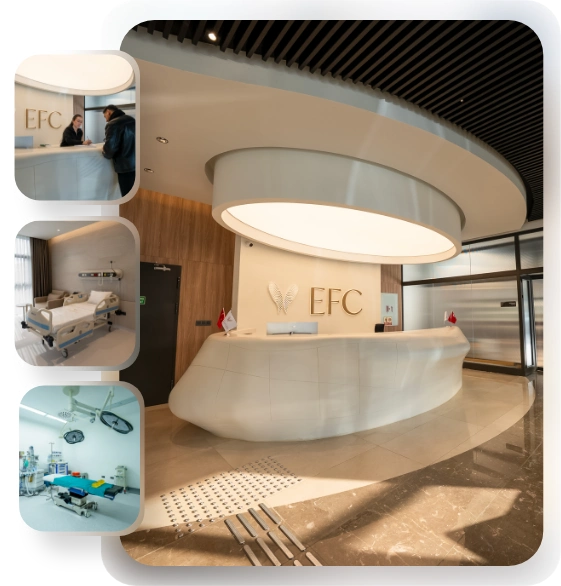
Comprehensive Care: From the First Examination to the Follow-Up Process.
EFC CLINIC is a center of excellence specializing in the most rigorous fields of surgical medicine—from aesthetic surgery to interventional treatments—where every step is carried out with meticulous care. Medical excellence, aesthetic precision, and an uncompromising ethical stance meet on the same line. Our subspecialty-trained specialists aim to achieve natural and reliable results by providing evidence-based care with modern imaging, standardized protocols, and safety systems. From consultation to recovery, your care is coordinated end-to-end with clear communication, transparent planning, and genuine respect for your health.