
 Türkçe
 Deutsch
 Français
Liposuction is a surgical procedure in which stubborn localized fat deposits that do not respond to diet and exercise routines are permanently removed from the body. Its primary goal is not weight loss, but rather to correct disrupted body contours to create a more proportional, fit, and aesthetically pleasing silhouette. It is performed to thin the subcutaneous fat layer and reshape body lines in individuals whose body mass index is balanced but who experience fat accumulation in certain areas due to genetic factors or lifestyle. This aesthetic intervention reveals the body’s natural curves and provides a noticeable improvement in physical appearance.
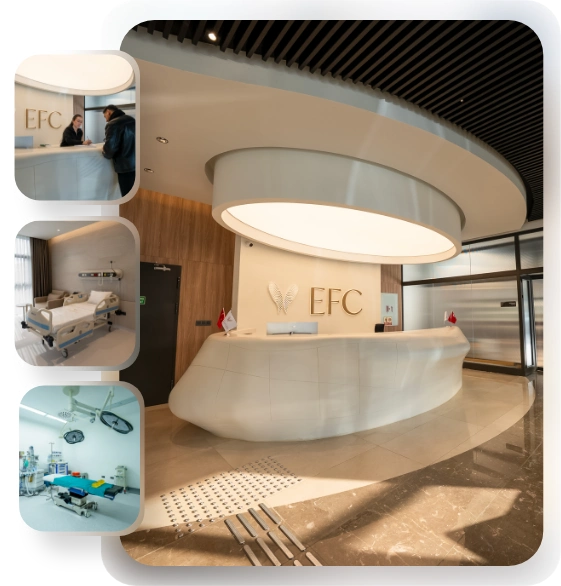
EFC CLINIC
Comprehensive Care: From Initial Consultation to Follow-Up.
EFC CLINIC is a center of excellence specializing in the most meticulous fields of surgical medicine, from aesthetic surgery to interventional treatments—where every step progresses with refined attention. Medical excellence, aesthetic precision, and uncompromising ethical standards converge on the same path. Our subspecialty-trained experts aim to achieve natural and reliable results by delivering evidence-based care supported by modern imaging, standardized protocols, and safety systems. From consultation to recovery, your care is coordinated end-to-end with clear communication, transparent planning, and genuine respect for your health.
Which Areas Can Liposuction Be Applied to, and Which Procedures Is It Combined With?
The body’s fat-storage map varies greatly depending on our genetic inheritance and sex. In some people, fat accumulates mainly in the abdomen, while in others it concentrates in the hips or back. Fortunately, with modern surgical techniques, we can safely intervene in almost every area of the body. The treatment zones are broad and can be tailored to individual needs.
Common areas we treat include:
- Face and jowl area
- Neck
- Breast tissue
- Arms
- Back
- Abdomen
- Waist
- Buttocks
- Inner thighs
- Outer thighs
- Inner knees
- Calves
- Ankles
A holistic perspective is essential in aesthetic surgery. Sometimes correcting a single area is not enough to achieve overall harmony. For this reason, we frequently combine liposuction with other surgical procedures. For example, when performing a tummy tuck (abdominoplasty), applying liposuction to the waist is a key step in achieving the desired hourglass appearance. Or in breast reduction surgeries, small refinements in the armpit area can make the result look far more refined. These combinations allow more comprehensive and satisfying outcomes within a single recovery period.
Why Is the Tumescent Liposuction Technique Safe?
The difficult and bloody operations once associated with liposuction are now a thing of the past. Today, the “tumescent” (wet) technique is the cornerstone of modern surgery and has elevated safety standards significantly. The concept is simple but highly effective: before removing fat, we inject a large amount of a special fluid mixture into the fatty area.
This special solution contains:
- Sterile saline solution
- A local anesthetic
- Epinephrine (adrenaline)
Each component has a vital role. Saline expands the fat tissue (tumescence), making it easier for cannulas to move smoothly through the tissue. The local anesthetic numbs the area and minimizes postoperative pain. Most importantly, epinephrine constricts small blood vessels, reducing bleeding to nearly negligible levels. This allows the surgeon to work in a cleaner field, and it helps patients experience less bruising and swelling afterward.
Contact us now to get detailed information about our treatments and procedures and to schedule an appointment!
What Are the Differences Between VASER and Laser Liposuction?
With technological progress, the goal is no longer only to remove fat, but also to protect tissues and encourage skin tightening. One of the most frequently used and reliable methods in our clinic is VASER technology. VASER is a highly intelligent system that uses ultrasonic sound waves.
Its advantages include:
- Targeting fat cells selectively
- Preserving connective tissue
- Avoiding nerve injury
- Protecting vascular structures
- Less bruising
- Faster recovery
The biggest difference with VASER is its “selectivity.” Sound waves gently emulsify fat cells in place without damaging nearby important tissues. The fat becomes fluid-like—similar to butter melting—and can then be removed with very fine cannulas. Laser liposuction, on the other hand, works through the thermal effect of laser energy. This heat can melt fat while also stimulating the deeper layer of skin to trigger collagen production. Especially in smaller areas like the jowls or in zones with mild skin laxity, the tightening benefit of laser’s thermal effect can be very useful. Which technology is right for you is determined after evaluating your tissue quality and goals.
Can High-Definition (HD) Liposuction Make Muscles More Defined?
If you exercise regularly and are at an ideal weight yet still cannot achieve the sculpted look you want, High-Definition (HD) Liposuction may be a suitable option. While traditional techniques aim to create a flatter, slimmer base, HD Lipo treats the body with the precision of a sculptor. This approach is based on the principle of “muscle etching.”
With HD Lipo, the following areas can be defined:
- Abdominal muscles (six-pack)
- Waist contours
- Adonis lines
- Pectoral borders
- Back muscle definition
- Arm muscle contours
In this technique, we remove fat more deeply where muscles should appear recessed, while leaving a thin fat layer where the muscle should look naturally rounded. This creates natural light-and-shadow effects, producing an athletic appearance as if you have been training intensely for years. The tissue selectivity of VASER is essential for this kind of millimetric sculpting.
Contact us now to get detailed information about our treatments and procedures and to schedule an appointment!
Can the Removed Fat Be Transferred?
Absolutely—and this is one of the best bonuses of the procedure. The fat we remove from your body is not medical waste; on the contrary, it is a priceless filler material rich in stem cells. Especially when fat is harvested with tissue-friendly methods such as VASER, it remains viable and can take hold at a high rate when transferred to another area. By removing fat from where it is unwanted and adding it where volume is lacking, we can optimize body proportions.
Common transfer areas include:
- Buttocks
- Breast tissue
- Sunken areas of the face
- Back of the hands
- Lips
- Chin
Without using foreign materials or implants, we can shape the buttocks (Brazilian Butt Lift—BBL), add fullness to the breasts, or soften a tired facial expression using your own tissue. Because it is your own tissue, there is no allergy risk and results look very natural.
What Should the Preoperative Preparation Process Look Like?
The foundations of a successful outcome are laid long before the operating room. In a detailed consultation, we review your medical history and expectations. However, there are also critical rules you must follow—especially regarding smoking, which is one of the most important factors affecting surgical success and healing quality. Smoking impairs tissue oxygenation, delays wound healing, and increases infection risk.
Key points to be mindful of include:
- Smoking
- Blood-thinning medications
- Herbal supplements
- Vitamin E
- Green tea consumption
- Alcohol intake
We typically ask you to stop these substances for a certain period before surgery (often around 2 weeks). It is also important to arrive fasting on surgery day, wear comfortable clothing, and remove hair from the treatment area in a safe way (trimming with a machine rather than shaving with a razor to reduce infection risk).
How Do Recovery and Compression Garment Use Progress?
Recovery after liposuction varies depending on the size of the treated area, but with modern techniques it is generally quite fast. We usually keep patients for one night and discharge them the next day. Mild soreness, limited movement, and swelling in the first days are completely normal. The most critical factor in this period is wearing a compression garment.
After fat removal, a space forms between the skin and the underlying muscle. External compression is vital to help the skin adhere smoothly to its new foundation and to prevent fluid accumulation in that space.
Benefits of the compression garment include:
- Controls swelling
- Helps the skin adapt to its new shape
- Prevents contour irregularities
- Reduces fluid build-up
- Decreases discomfort
We generally recommend wearing the garment consistently for 3 to 4 weeks. Swelling and bruising start to decrease by the end of the first week. Most patients can return to non-physical work within 3–5 days. Walking is allowed—and even encouraged—but heavy exercise should wait about 6 weeks. Patience is key: final results typically take 3–6 months as swelling fully resolves.
What Are the Risks of Liposuction Surgery?
As with any surgical procedure, liposuction carries certain risks, and it is important to understand them. However, in expert hands, under sterile conditions, and with proper patient selection, these risks are rare. The most common issues are temporary bruising and swelling.
Possible complications include:
- Infection
- Seroma (fluid accumulation)
- Hematoma
- Skin surface irregularities
- Sensory changes
- Asymmetry
We use antibiotics to reduce infection risk. Seroma can largely be prevented with compression garments and, if necessary, can be drained with a simple procedure. Contour irregularities are the most concerning aesthetic issue; to minimize this risk, we use homogeneous fat-removal technologies like VASER and support the process with postoperative massage when appropriate. Although more serious risks exist in medical literature, thorough health screening and meticulous surgical planning keep safety at the highest level.
Blog Posts

Most Preferred Countries for Hair Transplantation
Among the most preferred countries for hair transplantation are Turkey, India, South Korea, and Poland. [...]
Read More
21
Jan
Jan
Hair Transplant Prices
Hair transplant prices vary depending on the technique to be used, the number of grafts, [...]
Read More
21
Jan
Jan
Most Preferred Countries for Plastic Surgery
Among the most preferred countries for plastic surgery, Turkey, South Korea, the United States, and [...]
Read More
21
Jan
Jan
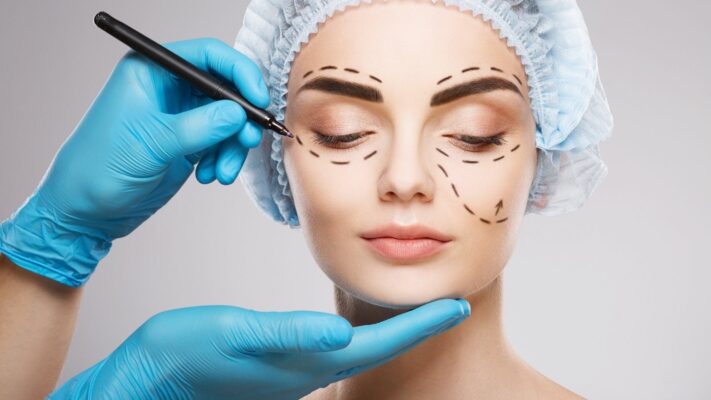
Plastic Surgery Prices
Plastic surgery prices vary depending on the type of procedure, geographical location, the surgeon’s experience, [...]
Read More
21
Jan
Jan
Physical Therapy Prices
Physical therapy prices vary depending on the number of sessions to be applied, the treatment [...]
Read More
21
Jan
Jan

Dental Treatment Prices
Dental treatment prices vary depending on the type of procedure to be performed, the quality [...]
Read More
21
Jan
Jan
Most Preferred Countries for Dental Treatments
Among the most preferred countries for dental treatments are Turkey, Hungary, Mexico, and Thailand. These [...]
Read More
21
Jan
Jan