
 Türkçe
 Deutsch
 Français
Brow lift surgery (Brow Lift) is the procedure of repositioning and fixating eyebrows that sag downward due to aging, gravity, or genetic factors to their ideal position using surgical techniques. This aesthetic procedure provides holistic rejuvenation of the upper face region by correcting brow ptosis that gives the person an older, tired, or angry appearance than they actually are. The operation is not limited to lifting the eyebrows; it also eliminates deepened horizontal lines on the forehead, tightens the temple area, and permanently restores the liveliness and dynamism the gaze has lost by relieving tissue pressure over the eyelids.
EFC CLINIC
Comprehensive Care: From Initial Consultation to Follow-Up.
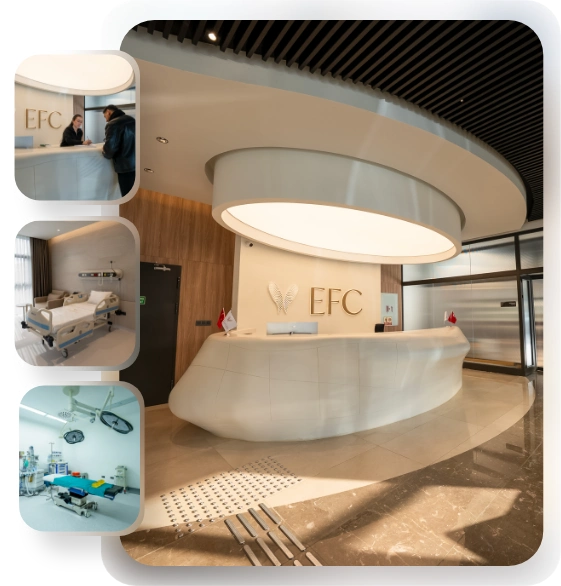
EFC CLINIC is a center of excellence specializing in the most meticulous fields of surgical medicine, from aesthetic surgery to interventional treatments—where every step progresses with refined attention. Medical excellence, aesthetic precision, and uncompromising ethical standards converge on the same path. Our subspecialty-trained experts aim to achieve natural and reliable results by delivering evidence-based care supported by modern imaging, standardized protocols, and safety systems. From consultation to recovery, your care is coordinated end-to-end with clear communication, transparent planning, and genuine respect for your health.
Why Does Brow Drooping Occur and How Does It Affect Facial Expression?
When gravity, the harmful effects of the sun, and our genetic inheritance come together, our skin begins to lose its elasticity. We usually see the first signs of this process in the forehead and temple area. When the eyebrows, especially their outer parts, start to sag downward, a load is placed on the eyelids. Many people begin researching eyelid aesthetics thinking “my eyelid has drooped.” However, in many cases, the main problem is that the forehead and brow descend as a whole.
An interesting aspect of this situation is the reaction our body gives. The pressure of the brows on the eyes can narrow the visual field or create a feeling of heaviness. To compensate for this, the muscle in our forehead called the “frontalis” involuntarily and continuously contracts. This reflex is an effort to keep the eyebrows up. However, this constant state of contraction is the main reason the horizontal lines on the forehead deepen and become permanent. In other words, low brows cause not only a tired expression but also a wrinkled forehead.
The main causes that lead to these aesthetic concerns are as follows:
- Genetic predisposition
- Effect of gravity
- Loss of skin elasticity
- Sun damage
- Overuse of facial expression muscles
How Effective Are Non-Surgical Brow Lift Methods?
The idea of surgery may be intimidating for some patients, or there may not yet be sagging advanced enough to require surgery. In such cases, medical aesthetic applications come into play. These methods are quite attractive because they do not require downtime and allow an immediate return to social life. However, it should not be forgotten that the effect of these procedures is temporary and that they offer a solution for mild to moderate issues.
The most commonly used method is Botulinum Toxin, known as Botox. With this application, the activity of the muscles that pull the brows downward is temporarily halted. Thus, the muscles that lift the brows become more dominant, and especially the tail of the brow rises. Another popular option is thread-lift methods. With special threads placed under the skin under local anesthesia, the brows are mechanically suspended upward.
The main types of non-surgical methods are as follows:
- Thread-lift techniques
- Focused ultrasound
- Microneedling radiofrequency
- Filler applications
These methods generally have longevity periods ranging from 6 months to 2 years. In cases where there is a lot of excess skin or the tissue has become heavy, the carrying capacity of these methods may be insufficient and surgical options come to the fore.
Contact us now to get detailed information about our treatments and procedures and to schedule an appointment!
What Is the Difference Between a Temporal Lift and an Endoscopic Brow Lift?
When a decision for surgery is made, the techniques that come into play are shaped according to the patient’s needs. Today, the architect of the slanted and dynamic looks known as “Almond Eye” or “Bella Eyes” is generally the Temporal Lift, that is, the temple lift procedure. Instead of tightening the entire forehead, this procedure focuses only on the temple area and the outer part of the brow. It is performed with a small incision hidden within the scalp and lifts the tail of the brow upward. In this way, the gaze opens up and the accumulations at the eye corner are tightened.
For those seeking a more comprehensive and permanent solution, the method accepted as the “Gold Standard” is Endoscopic Brow Lift surgery. This technique is one of the greatest advantages of modern surgery. Unlike the long incisions used in the past, it is performed by entering through a few small openings within the scalp. Thanks to thin instruments with a camera at the tip (endoscope), the surgeon operates while viewing all the subcutaneous structures, nerves, and muscles on a large screen.
The greatest strength of the endoscopic method is that it releases not only the skin but all the tissues of the forehead from the periosteum and frees them, then fixates them securely to their new position. This fixation ensures that the result remains permanent for years. In addition, the minimal risk of numbness and the shorter recovery process make this method popular.
What Should Be Considered During the Preoperative Preparation Process?
A successful operation depends not only on the surgeon’s skill but also on a good preparation process. After the decision for surgery is made, preparing the body for this process directly affects the comfort of the recovery period. Especially staying away from factors that may increase the risk of bleeding ensures that postoperative bruising and swelling are minimized.
There are some substances that patients need to stop using at least two weeks before the operation. Any factor that slows blood clotting can cause unwanted oozing in the surgical field. Therefore, it is vital to transparently share with your doctor all medications and supplements you use.
The things to avoid before the operation are as follows:
- Aspirin
- Blood thinners
- Vitamin E supplements
- Green tea
- Ginkgo biloba
- Smoking
- Alcohol
Especially smoking must absolutely not be consumed before and after surgery because it disrupts tissue oxygenation and delays wound healing. In addition, patients who will receive general anesthesia need to stop eating and drinking after 24:00 on the night of the operation.
Contact us now to get detailed information about our treatments and procedures and to schedule an appointment!
Is the Recovery Process Difficult and How Is Swelling Reduced?
There is a mistaken belief among the public that facial surgeries are very painful and difficult. However, after brow lift operations, patients’ pain complaints are quite low. What is generally felt is a sense of tightness in the forehead and mild pressure. This can be easily controlled with simple painkillers.
In the first few days after surgery, swelling (edema) and mild bruising around the upper part of the face and around the eyes are expected and natural. This is part of the body’s healing mechanism. Patients can generally take short walks in their social lives 1–2 days after the procedure and return to work within 1 week to 10 days. However, full recovery and the tissues taking their final form may take a few weeks.
The following are recommended to speed up the recovery process:
- Cold compress
- Keeping the head elevated
- Drinking plenty of water
- Regular medication use
- Protection from the sun
As professional support for rapid reduction of swelling, “Lymphatic Drainage Massage” is of great importance. This special massage technique allows the fluid accumulated between tissues to be removed from the body through lymph channels. Performed by experienced professionals, this application not only reduces swelling but also accelerates tissue healing and helps the patient feel more comfortable.
Blog Posts

Most Preferred Countries for Hair Transplantation
Among the most preferred countries for hair transplantation are Turkey, India, South Korea, and Poland. [...]
Read More
21
Jan
Jan
Hair Transplant Prices
Hair transplant prices vary depending on the technique to be used, the number of grafts, [...]
Read More
21
Jan
Jan
Most Preferred Countries for Plastic Surgery
Among the most preferred countries for plastic surgery, Turkey, South Korea, the United States, and [...]
Read More
21
Jan
Jan
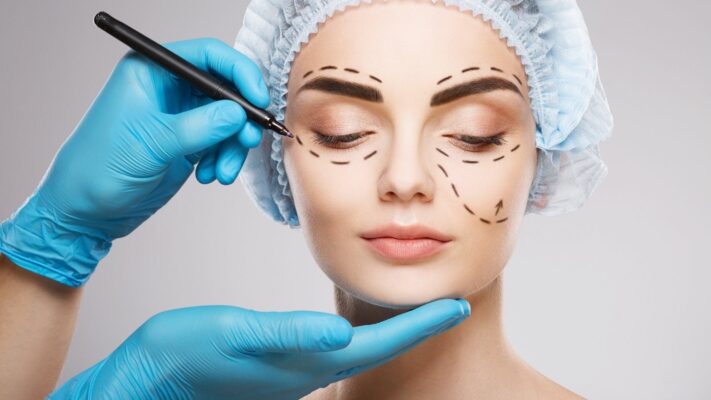
Plastic Surgery Prices
Plastic surgery prices vary depending on the type of procedure, geographical location, the surgeon’s experience, [...]
Read More
21
Jan
Jan
Physical Therapy Prices
Physical therapy prices vary depending on the number of sessions to be applied, the treatment [...]
Read More
21
Jan
Jan

Dental Treatment Prices
Dental treatment prices vary depending on the type of procedure to be performed, the quality [...]
Read More
21
Jan
Jan
Most Preferred Countries for Dental Treatments
Among the most preferred countries for dental treatments are Turkey, Hungary, Mexico, and Thailand. These [...]
Read More
21
Jan
Jan