
 Türkçe
 Deutsch
 Français
Hair loss affects millions of people worldwide and can have a serious impact on self-confidence and quality of life. By 2026, hair transplant technology has advanced to the point where highly natural, permanent results are achievable with minimal downtime. In this comprehensive guide, we explain exactly how hair transplantation works, which techniques are available, and everything you need to know before and after the procedure. For more information, visit our EFC Clinic hair transplant unit.
What Is a Hair Transplant?
A hair transplant is a surgical procedure in which hair follicles (grafts) are harvested from a donor area — typically the back or sides of the scalp — and implanted into areas affected by hair loss. Because the transplanted follicles are genetically resistant to balding, the results are permanent and completely natural-looking. Turkey, and particularly Istanbul, has become one of the world’s leading destinations for this procedure due to its combination of expert surgeons and competitive pricing.
It is important to understand that a hair transplant redistributes existing healthy follicles — it does not stop ongoing hair loss elsewhere. A thorough pre-operative consultation is therefore essential. Our specialist team at EFC Clinic will assess your individual situation and build a personalised treatment plan.
Hair Transplant Methods Explained
FUE (Follicular Unit Extraction)
FUE is the most widely used hair transplant technique in 2026. Individual follicular units are extracted using a specialised micro-punch tool, leaving no linear scar. Because no scalpel or sutures are required, recovery time is significantly shorter and most patients return to their normal routine within 3 to 5 days.
- No visible scarring: Micro-extraction points heal as tiny dots invisible to the naked eye.
- Fast recovery: Most patients resume social and professional activities within days.
- High graft survival: When performed correctly, survival rates exceed 95%.
- Natural results: Hair angles are precisely matched to existing growth patterns.
DHI (Direct Hair Implantation)
DHI uses a specialised Choi implanter pen to extract and implant grafts simultaneously, minimising the time grafts spend outside the body and increasing their viability. DHI is particularly recommended for patients who prefer not to shave their head and for targeted density enhancement. Learn more on our hair transplant page.
Sapphire FUE
In Sapphire FUE, standard steel blades are replaced with sapphire-tipped blades for channel creation. This enables smaller, more precise incisions, reduces tissue trauma, minimises post-operative swelling and speeds up healing. In 2026, Sapphire FUE is among the most recommended techniques by leading specialists globally.
Step-by-Step: The Hair Transplant Procedure
Step 1: Consultation and Planning
A successful outcome begins with a thorough consultation. The specialist evaluates the cause and extent of hair loss, assesses donor area capacity, determines the number of grafts required, and designs the hairline. Contact EFC Clinic to schedule your free initial consultation.
Step 2: Pre-Operative Preparation
On the day of surgery, pre-operative checks are performed, the donor area is shaved (not required for DHI), and local anaesthesia is administered to ensure a completely pain-free experience throughout.
Step 3: Graft Extraction
Once the anaesthesia takes effect, grafts are carefully extracted using micro-motors and micro-punch instruments. Extracted grafts are immediately placed in specialised preservation solutions to maintain viability until implantation.
Step 4: Channel Opening
Recipient channels are created in the thinning or bald areas. This is one of the most critical steps — the angle, direction and depth of each channel directly determine the naturalness of the final result. Sapphire blades allow for exceptional precision here.
Step 5: Graft Implantation
Each graft is carefully placed into the prepared channels, matching the natural growth direction and angle of the surrounding hair. This stage demands outstanding skill and coordinated teamwork to achieve a dense, natural-looking result.
Step 6: Post-Operative Care
After the procedure, the transplanted area is gently cleaned, the donor area is bandaged, and the patient receives detailed aftercare instructions along with prescribed medications. Most patients return home the same day. EFC Clinic’s patient services include round-the-clock post-operative support.
Hair Transplant Recovery Timeline
Days 1–3
The most sensitive period. The transplanted area must not be touched, sleeping face-down must be avoided, and strenuous physical activity should be refrained from. Minor swelling and redness are completely normal. The first wash is performed on day 3 according to clinic instructions.
Shock Loss Phase (Weeks 2–8)
Most transplanted hairs shed during this period. This is a completely normal and expected phase known as shock loss. The follicles remain alive beneath the scalp and will begin producing new hair growth soon after.
Growth Phase
New hair begins to emerge from months 3 to 4. Noticeable density improvement is visible by month 6. Final results are achieved between 12 and 18 months post-surgery. Regular follow-up appointments are essential throughout this phase. EFC Clinic provides a structured follow-up protocol for all patients.
Who Is a Good Candidate for Hair Transplant?
Not everyone is an ideal candidate. The best candidates typically present the following characteristics:
- Stable hair loss: The rate of loss has slowed or stabilised.
- Sufficient donor supply: Adequate density in the back and sides of the scalp.
- Good general health: No conditions or medications that could impair healing.
- Realistic expectations: Understanding the procedure adds density but cannot recreate an adolescent hairline entirely.
- Age 25 or older: Hair loss patterns may not be fully established before this age.
Our specialist doctors will assess your suitability comprehensively during the consultation.
Hair Transplant Cost in 2026
Cost depends on the chosen method, the number of grafts required, and the clinic’s location. Turkey offers world-class hair transplant procedures at a fraction of the cost compared to the UK, Germany or the US, without compromising on quality or safety standards. EFC Clinic operates with transparent, all-inclusive pricing — no hidden fees. Request a free quote today.
In addition to hair transplantation, EFC Clinic offers a full range of medical services including plastic surgery and other specialised treatments.
Frequently Asked Questions
Is a hair transplant permanent?
Yes. Transplanted follicles are genetically resistant to the hormones that cause hair loss, meaning results are permanent and lifelong.
Is the procedure painful?
No. Performed under local anaesthesia, the procedure is entirely pain-free. Mild tenderness in the days following is easily managed with prescribed medication.
What is the ideal age for a hair transplant?
Most specialists recommend waiting until at least age 25, as hair loss patterns may not be fully established before this point.
How many sessions are needed?
The vast majority of patients achieve their desired results in a single session. A second session may be considered for extensive hair loss or limited donor supply.
When can I exercise after surgery?
Light walking is permitted after one week. Moderate exercise can resume after three weeks, and intense physical activity after four to six weeks.
Is any season better for hair transplant?
Hair transplants can be performed year-round. In summer months, extra care with sun protection of the transplanted area is recommended.
Ready to take the first step? Contact EFC Clinic for a free consultation, or explore our hair transplant unit for detailed information.
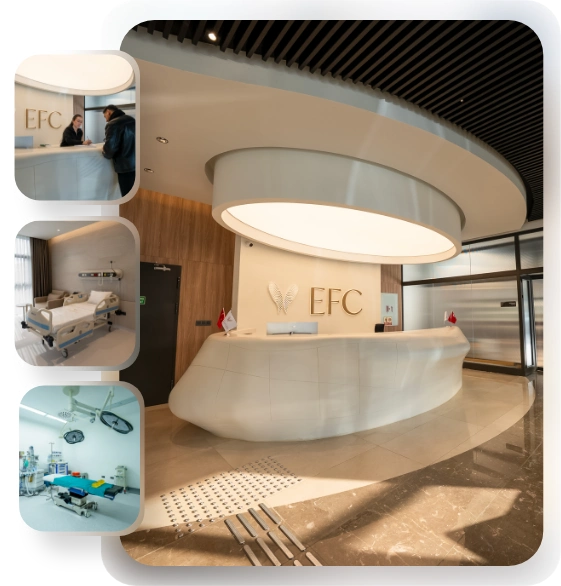
Comprehensive Care: From the First Examination to the Follow-Up Process.
EFC CLINIC is a center of excellence specializing in the most rigorous fields of surgical medicine—from aesthetic surgery to interventional treatments—where every step is carried out with meticulous care. Medical excellence, aesthetic precision, and an uncompromising ethical stance meet on the same line. Our subspecialty-trained specialists aim to achieve natural and reliable results by providing evidence-based care with modern imaging, standardized protocols, and safety systems. From consultation to recovery, your care is coordinated end-to-end with clear communication, transparent planning, and genuine respect for your health.