
 Türkçe
 Deutsch
 Français
Ear, nose and throat conditions are among the most common health issues affecting quality of daily life and often require specialist intervention. By 2026, ENT treatments have advanced considerably, with endoscopic and minimally invasive techniques delivering faster recovery times and higher success rates than ever before. In this comprehensive guide, we cover everything from septoplasty and sinus surgery to tonsil operations and ear treatments. For more information, visit our EFC Clinic ENT Treatments unit.
What Is ENT (Ear, Nose and Throat)?
ENT — formally known as Otolaryngology – Head and Neck Surgery — is the medical speciality that diagnoses and treats conditions affecting the ears, nose, sinuses, throat (pharynx and larynx), and the head and neck region. Its scope ranges from hearing loss and balance disorders to chronic nasal obstruction, voice problems and swallowing difficulties.
Early specialist evaluation of symptoms directly improves the outcome of both medical and surgical treatment. EFC Clinic's specialist ENT surgeons conduct a thorough individual assessment and build a personalised treatment plan for every patient.
Septoplasty – Deviated Septum Surgery
What Is a Deviated Septum?
The nasal septum is the wall of cartilage and bone that divides the nasal cavity into two sides. When this wall deviates significantly to one side, it is called a deviated nasal septum. This is one of the most common anatomical variations and can cause chronic nasal obstruction, sleep apnoea, snoring, recurrent sinusitis and difficulty breathing at night.
How Is Septoplasty Performed?
Septoplasty is a functional nasal surgery that corrects the deviated septum. All incisions are made inside the nostrils — no external scarring. The procedure is performed under general or local anaesthesia and takes approximately 45 to 90 minutes. Silicone nasal packing is placed after surgery and removed on days 3–5.
Septoplasty corrects the structural deviation only — it does not alter the external appearance of the nose. If both functional and aesthetic improvement are desired, a combined septorhinoplasty procedure can be planned. Learn more on our plastic surgery page.
Septoplasty Recovery Timeline
- Days 1–3: Packing in place; mouth breathing may be needed; mild swelling is normal.
- Days 3–5: Packing removed; nasal breathing improves noticeably.
- Week 2: Return to social and professional activities.
- Weeks 4–6: Return to strenuous physical activity.
- Months 3–6: Full recovery and final functional result.
Sinusitis and Sinus Surgery (FESS)
What Is Sinusitis?
The sinuses are air-filled cavities in the facial bones. When they become inflamed and blocked, sinusitis develops. Symptoms include facial pain and pressure, nasal discharge, loss of smell and headaches. Sinusitis lasting more than 12 weeks is defined as chronic sinusitis and, when unresponsive to medication, may require surgery.
Functional Endoscopic Sinus Surgery (FESS)
FESS is the gold-standard surgical treatment for sinus disease. Using thin endoscopic cameras and specialised instruments inserted through the nostrils, the surgeon widens blocked sinus openings, removes polyps if present and restores natural sinus drainage — all without any external incisions. Performed under general anaesthesia, the procedure takes approximately 1 to 2 hours. Most patients are discharged the same day or the following morning.
Tonsil and Adenoid Surgery
Tonsillectomy
Tonsillectomy — surgical removal of the tonsils — is performed for recurrent tonsillitis, sleep apnoea or enlarged tonsils causing swallowing difficulties. Under general anaesthesia, the procedure takes approximately 30 to 45 minutes and is typically performed as a day-case surgery. A soft diet is recommended for 10 to 14 days post-operatively.
Adenoidectomy
Enlarged adenoids — particularly common in children — cause chronic nasal obstruction, mouth breathing, snoring and recurrent ear infections. Adenoidectomy is the surgical removal of the adenoid tissue. It is a short procedure with a fast recovery. EFC Clinic's patient services ensure comprehensive post-operative follow-up for all patients.
Ear Treatments
Tympanoplasty / Myringoplasty
Damage to the eardrum from perforation or chronic middle ear infection is repaired with myringoplasty or tympanoplasty. These procedures aim to restore hearing and prevent recurring ear infections. They are performed under general anaesthesia.
Ventilation Tube Insertion (Grommets)
For recurrent middle ear infections or glue ear (otitis media with effusion), a small ventilation tube (grommet) is inserted into the eardrum to ventilate the middle ear and prevent fluid accumulation. The procedure is typically completed in 15 to 30 minutes.
Hearing Loss Assessment
Our ENT unit carries out full audiological testing to determine the type and degree of hearing loss. Treatment options may include hearing aids, middle ear surgery or cochlear implantation. Our specialist surgeons determine the most appropriate approach for each patient's individual situation.
Why Choose Turkey and EFC Clinic?
- Experienced ENT specialists: Internationally trained surgeons with high-volume surgical experience.
- Advanced technology: Endoscopic and navigation-guided sinus surgery, laser ENT treatments.
- Cost advantage: The same quality treatment at 40–60% lower cost than Western Europe.
- Short waiting times: From consultation to surgery with minimal delay.
- Comprehensive support: Transfer, accommodation and post-operative follow-up packages available.
At EFC Clinic, our ENT treatments unit delivers care to international standards. Contact us to begin your personal assessment. You can also explore our full range of medical treatments and surgical procedures.
Frequently Asked Questions
Is septoplasty a permanent solution?
Yes. Correcting the septum is a permanent anatomical correction. Recurrence is not expected unless there is a significant subsequent trauma.
Can septoplasty and rhinoplasty be performed together?
Yes. A combined procedure called septorhinoplasty can address both functional correction and aesthetic reshaping in a single operation.
Is FESS surgery painful?
Performed under general anaesthesia, no pain is felt during surgery. Post-operative pressure and a sense of fullness are effectively managed with prescribed medication.
When can I eat normally after tonsillectomy?
Soft and cool foods are recommended for 10 to 14 days after surgery, after which normal diet can be resumed.
Do ENT procedures require a hospital stay?
Many ENT operations are performed as day-case procedures. More complex interventions may require a 1 to 2 night stay.
Is ENT surgery in Turkey safe?
ENT surgery performed at accredited clinics by experienced specialists is safe and meets international standards. EFC Clinic operates in full compliance with current medical protocols.
Ready to address your ENT concerns? Contact EFC Clinic for a free consultation, or explore our ENT treatments unit for detailed information.
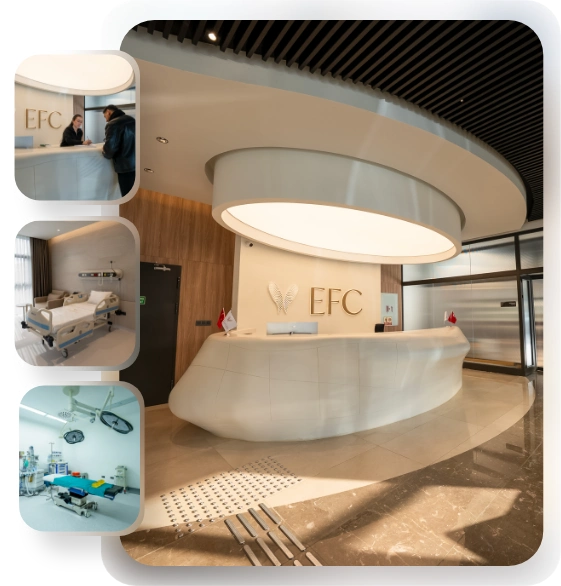
Comprehensive Care: From the First Examination to the Follow-Up Process.
EFC CLINIC is a center of excellence specializing in the most rigorous fields of surgical medicine—from aesthetic surgery to interventional treatments—where every step is carried out with meticulous care. Medical excellence, aesthetic precision, and an uncompromising ethical stance meet on the same line. Our subspecialty-trained specialists aim to achieve natural and reliable results by providing evidence-based care with modern imaging, standardized protocols, and safety systems. From consultation to recovery, your care is coordinated end-to-end with clear communication, transparent planning, and genuine respect for your health.