
 Türkçe
 Deutsch
 Français
Tummy tuck surgery, known in medical literature as abdominoplasty, is the most comprehensive body contouring procedure that eliminates resistant fat accumulation, skin sagging, and muscle laxity problems in the abdominal region in a single session. This surgical procedure targets deformities that cannot be corrected with diet and exercise, anatomically repairs loosened abdominal muscles (diastasis recti), and removes excess skin tissue from the body. As a result, the anterior abdominal wall is tightened again, the waist curve is defined, and the patient is given a more athletic, fit silhouette. This gold-standard method in aesthetic surgery is the most effective way to permanently restore trunk aesthetics, especially in individuals after childbirth or those who have experienced significant weight loss.
EFC CLINIC
Comprehensive Care: From Initial Consultation to Follow-Up.
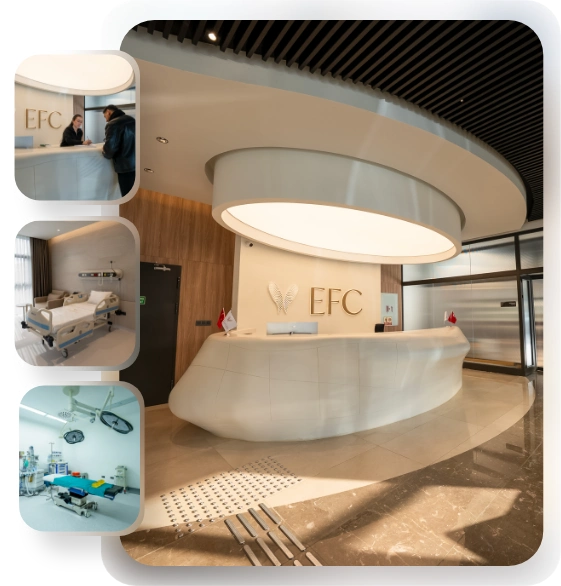
EFC CLINIC is a center of excellence specializing in the most meticulous fields of surgical medicine, from aesthetic surgery to interventional treatments—where every step progresses with refined attention. Medical excellence, aesthetic precision, and uncompromising ethical standards converge on the same path. Our subspecialty-trained experts aim to achieve natural and reliable results by delivering evidence-based care supported by modern imaging, standardized protocols, and safety systems. From consultation to recovery, your care is coordinated end-to-end with clear communication, transparent planning, and genuine respect for your health.
What is a tummy tuck surgery and what is its purpose?
Tummy tuck surgery, one of the most powerful tools of aesthetic surgery, is a procedure that restructures the center of the body. The main purpose of this surgery is to repair the anterior abdominal wall that has been deformed due to reasons such as pregnancy, weight changes, or aging. During the procedure, loose and stretched skin is removed, while the real “magic” happens inside. The abdominal muscles are brought together and sutured along the midline like an internal corset. Thanks to this internal repair, the abdomen gains a completely flat form and the waist circumference is significantly reduced.
This procedure is definitely not a weight loss method. Rather than the number on the scale, the smoothness and tightness of body contours are targeted. The surgery is generally performed with an incision extending sideways from the area where a C-section scar is located. In modern techniques, this incision is planned quite low so that it remains within the underwear boundaries. As a result, the patient achieves a tight, athletic, and aesthetic appearance instead of a sagging abdomen.
What are the main causes that create the need for a tummy tuck?
Deformities in the abdominal region generally arise from biological changes related to the natural processes of life, which are often beyond the individual’s control. The main factors underlying these structural deteriorations that cannot be corrected with exercise and diet are clear.
The main factors that lead to these deformities are as follows:
- Pregnancy
- Extreme weight gain and loss
- Conditions after bariatric surgery
- Genetic predisposition
- Aging process
- Hormonal changes
- Abdominal muscle separation (Diastasis Recti)
Especially during pregnancy, the lateral separation of the abdominal muscles and excessive stretching of the skin can make it impossible for the tissues to return to their former state after childbirth. The muscle separation condition we call “Diastasis Recti” causes the abdomen to protrude forward no matter how thin the person becomes. This is not only an aesthetic but also a functional problem and requires surgical repair.
Who is an ideal candidate for a tummy tuck?
As with every surgical procedure, correct patient selection is the key to success in tummy tuck surgery. It is of great importance that individuals considering this surgery meet certain criteria, both for safety and for the quality of the aesthetic outcome. First of all, the person’s general health status must be suitable for receiving anesthesia.
The characteristics sought in ideal candidates are as follows:
- Being close to the ideal weight
- Having achieved weight maintenance stability
- Not smoking
- Not having chronic illness or having it under control
- Having realistic expectations
- Having completed pregnancy plans
Weight stability is very critical here. If the patient is actively continuing to lose weight or has pregnancy plans in the near future, postponing the surgery would be more appropriate. Because major weight changes or a new pregnancy after surgery can cause the repaired tissues to loosen again and the result to deteriorate. Smoking, on the other hand, is the biggest enemy of surgery; since it impairs tissue nourishment, it must be stopped at least 4 weeks before surgery.
Contact us now to get detailed information about our treatments and procedures and to schedule an appointment!
What are the differences between mini and full tummy tuck?
The degree and location of deformity in patients determine the technique to be applied. The same type of surgery is not performed on everyone; depending on the person’s anatomy, “Mini” or “Full” (Classic) abdominoplasty is preferred. The main factor determining this distinction is the condition of the skin above the navel and the level of muscle laxity.
Mini tummy tuck is generally suitable for patients whose problem is limited only below the navel. In these patients, there is no significant excess skin above the navel or muscle separation. Only a small lower abdominal bulge and skin laxity are corrected. The incision is shorter and recovery is relatively faster.
Full tummy tuck is a more comprehensive procedure. It is performed in patients who have skin sagging, stretch marks, and muscle separation both below and above the navel. In this technique, the navel is freed, the abdominal muscles are repaired from the ribs to the groin along the entire length, and the excess tissue is completely removed. Then the navel is adapted to its new position. This method provides a complete transformation and maximum tightening in the abdominal area.
How is VASER technology integrated with a tummy tuck?
In the past, classic tummy tuck surgeries were performed focusing only on skin and muscle. However, today we have entered the era of “High Definition” body contouring. VASER technology is an advanced liposuction method that selectively breaks down fat cells using sound waves. When we combine this technology with a tummy tuck (Lipo-Abdominoplasty), the results become much more sophisticated.
The greatest advantage of VASER is that it allows us to shape not only the anterior abdominal wall but also the waist sides, the back, and even the hip transitions. We call this “360-degree contouring.” While the front is flattened with a tummy tuck, the waist indentation is deepened with VASER and a more hourglass-shaped silhouette is obtained. In addition, because VASER does not damage vascular and nerve structures, postoperative bruising and edema are less and the recovery process is accelerated. This integrated approach offers the patient not only a flat abdomen but an athletic and aesthetic torso.
What is the tummy tuck surgery process and how is drain use managed?
The surgery process begins with detailed planning. The procedure is performed under general anesthesia in a fully equipped hospital and may take 3 to 5 hours depending on the combined procedures to be performed. During surgery, the body contours are shaped first with VASER, and then the tummy tuck phase begins.
At the end of the operation, thin silicone tubes called “drains” are placed to remove blood and body fluids that may accumulate inside. Drains, which are one of the issues patients are most concerned about, are actually the insurance of the recovery process. By preventing internal fluid accumulation (seroma), they allow the tissues to adhere to each other. Drains are usually removed painlessly 1 to 3 days after surgery when the amount of fluid decreases. Most patients are discharged the next day or on the second day and sent home.
Contact us now to get detailed information about our treatments and procedures and to schedule an appointment!
What should be considered during the recovery process after a tummy tuck?
The postoperative period is a healing journey that requires patience and care. It is completely natural to feel tightness and sensitivity in the abdominal area during the first few days. In this process, the painkillers prescribed by your doctor will ensure your comfort. There are strict rules that patients must follow for healing to progress in a healthy way:
The important points to pay attention to are as follows:
- Regular use of a compression garment
- Short, frequent walks
- Regular intake of prescribed medications
- Drinking plenty of water
- Avoiding smoking and alcohol
- Avoiding heavy lifting
- Complying with sexual activity restrictions
- Hygiene of the wound area
Wearing a compression garment is the most critical part of this process. The medical garment worn for about 4–6 weeks compresses edema and supports the repaired abdominal muscles. Patients are advised to walk slightly bent forward during the first week to reduce tension on the suture line. Returning to a desk job is generally possible within 2–3 weeks, but for activities such as sports, it is necessary to wait 6 weeks.
Are tummy tuck results permanent and will there be a scar?
The results of a tummy tuck are permanent as long as the patient takes good care of themselves. The repaired muscle structure and removed excess skin do not come back. However, the body is a living organism; the aging process continues and gravity is always active. If the patient gains excessive weight after surgery or adopts an unhealthy lifestyle, the results may be adversely affected over time. For this reason, it is most accurate to see the surgery as the beginning of a new and healthy life.
As for scarring, there is no scarless surgery in plastic surgery, but there is a “hidden scar.” The scar of the tummy tuck incision is planned to remain completely under underwear. This line, which is red and prominent in the first months, gradually turns pink and becomes faint, blending into the skin tone by the end of about one year. The quality of scar healing also depends on the person’s genetic structure and wound care. However, the flat abdomen and slim waist appearance achieved is satisfying enough for patients to consider the presence of this thin scar insignificant.
Blog Posts

Most Preferred Countries for Hair Transplantation
Among the most preferred countries for hair transplantation are Turkey, India, South Korea, and Poland. [...]
Read More
21
Jan
Jan
Hair Transplant Prices
Hair transplant prices vary depending on the technique to be used, the number of grafts, [...]
Read More
21
Jan
Jan
Most Preferred Countries for Plastic Surgery
Among the most preferred countries for plastic surgery, Turkey, South Korea, the United States, and [...]
Read More
21
Jan
Jan
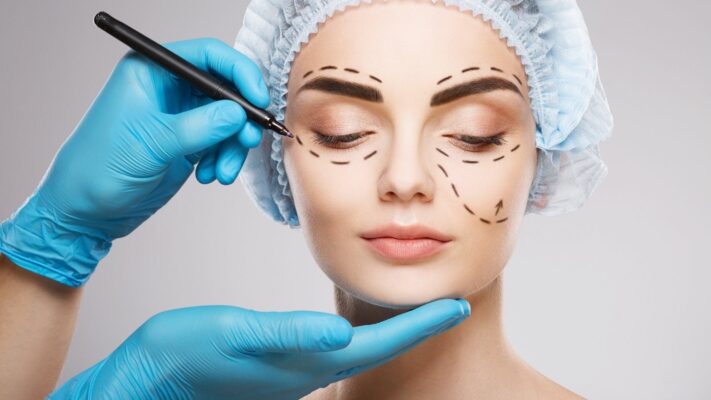
Plastic Surgery Prices
Plastic surgery prices vary depending on the type of procedure, geographical location, the surgeon’s experience, [...]
Read More
21
Jan
Jan
Physical Therapy Prices
Physical therapy prices vary depending on the number of sessions to be applied, the treatment [...]
Read More
21
Jan
Jan

Dental Treatment Prices
Dental treatment prices vary depending on the type of procedure to be performed, the quality [...]
Read More
21
Jan
Jan
Most Preferred Countries for Dental Treatments
Among the most preferred countries for dental treatments are Turkey, Hungary, Mexico, and Thailand. These [...]
Read More
21
Jan
Jan