
 Türkçe
 Deutsch
 Français
Bichectomy is the surgical removal of the Bichat fat pads located in the deep plane of the cheek area in order to slim the facial features and achieve a sharper contour. Defined in medical terminology as buccal fat excision, this procedure is widely known in the aesthetic world as Hollywood cheeks or cheek slimming aesthetics. The fundamental mechanism of the operation is to permanently eliminate structural cheek fullness that is resistant to diet and exercise, thereby making the cheekbones more prominent and giving the facial oval the aesthetically desired inverted triangle (V) shape.
EFC CLINIC
Comprehensive Care: From Initial Consultation to Follow-Up.
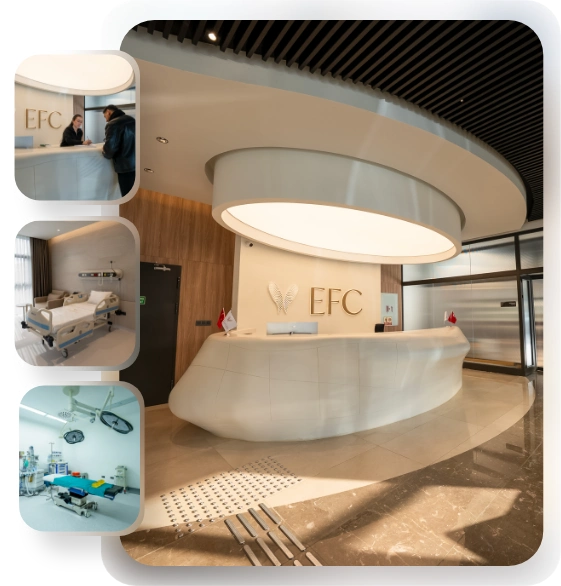
EFC CLINIC is a center of excellence specializing in the most meticulous fields of surgical medicine, from aesthetic surgery to interventional treatments—where every step progresses with refined attention. Medical excellence, aesthetic precision, and uncompromising ethical standards converge on the same path. Our subspecialty-trained experts aim to achieve natural and reliable results by delivering evidence-based care supported by modern imaging, standardized protocols, and safety systems. From consultation to recovery, your care is coordinated end-to-end with clear communication, transparent planning, and genuine respect for your health.
What Is Bichectomy and Why Is It Called Hollywood Cheeks?
Bichectomy is, technically, the surgical removal of fat deposits called “Bichat” (Bichat Fat Pad) located in the deep plane of the cheek area. These fat pads are different from the superficial fats located just under the skin that change with weight gain and loss. They are located deeper, between the chewing muscles, and tend to preserve their volume structurally. In other words, no matter how much you diet, this fat mass usually remains in place.
The reason the operation is referred to as “Hollywood Cheeks” is quite clear. The iconic facial features of Hollywood stars, defined by the play of light and shadow, are often a result of this operation. This sharp look, which used to be attempted with makeup tricks and contouring applications, becomes a permanent anatomical feature thanks to bichectomy. This procedure is not only a fat removal procedure but a contour correction art that changes the angle at which the face refracts light. That slight hollow in the cheeks makes the face look slimmer, more mature, and aesthetically more balanced.
Who Is a Suitable Candidate for Bichectomy Surgery?
Many people considering this operation look in the mirror and feel their face appears heavier than it actually is. Even though their body mass index is within normal limits, individuals with a round or “chubby-looking” face are the group that most frequently applies for this procedure. Our genetic inheritance is the most important factor that determines our face shape, and sometimes this inherited cheek structure does not change no matter how thin a person is.
In our clinical evaluations, we expect the patient’s facial skeletal structure to have settled. For this reason, it is necessary for adolescence to have ended and for facial features to have matured. Ideal candidates are individuals who have an excess of fat in their cheeks that can be grasped between the fingers but who are not overweight.
The features we look for in suitable candidates for bichectomy are as follows:
- Round facial features
- Prominent cheeks
- Normal body weight
- Thick cheek skin
- Realistic expectations
- Facial asymmetry
To Whom Is This Operation Not Recommended and Who Are the High-Risk Groups?
Although bichectomy is popular, it is not a “magic wand” that can be applied to everyone. In aesthetic surgery, our most important principle is to think about the patient’s tomorrow as much as their today. As we age, our face naturally loses volume, fat tissues diminish, and succumb to gravity. If the patient’s facial structure is already thin, long, or gaunt, this surgery may make the person look much older and more tired than they are. We call this the “skeletal face” appearance, and we want to avoid it.
In addition, in individuals with a high body mass index, meaning those who are overweight, this procedure alone may not yield a satisfying result. For these patients, a general weight loss process and diet program are recommended first. Because the cause of facial width may not be only the Bichat pads but also an overall increase in subcutaneous fat tissue.
Contact us now to get detailed information about our treatments and procedures and to schedule an appointment!
How Is Bichectomy Surgery Performed and What Is the Process Like?
One of the points our patients feel most comfortable about is that this process is extremely comfortable and fast. Bichectomy is a minimally invasive procedure that does not require major surgical preparation and is usually performed under local anesthesia. In other words, you remain aware during the procedure, but you do not feel any pain or soreness because your cheek area is completely numbed. You can think of it as being in a dentist’s chair, but we are talking about a much shorter procedure.
The surgeon makes a tiny incision of approximately 1 centimeter on the cheek mucosa from inside the mouth. From this incision, the preplanned portion of the Bichat fat pads is gently removed with delicate maneuvers. Since the entire procedure is performed from inside the mouth, no externally visible scar remains on your cheeks, face, or jaw. The operation takes an average of 30–45 minutes and does not require hospitalization.
With Which Other Aesthetic Procedures Can This Procedure Be Combined?
Facial aesthetics is a whole, and sometimes touching only one point may not be enough to achieve that perfect balance. As part of a “holistic facial shaping” approach, bichectomy is frequently and successfully combined with other aesthetic procedures. The goal is not only to hollow the cheeks but also to sharpen the jawline and lift the face upward.
For example, while the cheeks are slimmed, fillers or implants can be used to make the jawline look stronger. Or, excess tissue in the neck area can be removed to completely reshape the lower half of the face.
The procedures frequently combined with bichectomy are as follows:
- Submental liposuction
- Chin filler
- Masseter botox
- Cheekbone filler
- Facelift
- Rhinoplasty
Are the Results Permanent or Do the Removed Fats Come Back?
One of the most attractive aspects of this surgery is that the result is lifelong and permanent. The number of fat cells in our body becomes fixed after adolescence. When we gain weight, the number of cells does not increase; only their volume expands. In bichectomy surgery, we physically remove that fat depot from the area. Since the depot is eliminated, it is not possible for that area to fill up again.
Even if the patient gains weight in later years, that preoperative round and chubby appearance in the cheek area does not occur. Of course, there may be a general widening of the face, but the contour difference is always preserved. This means, for patients, that the procedure is a long-term aesthetic investment.
What Is the Difference Between Fillers and Weight Loss Methods and Bichectomy?
Many patients diet or try various medical aesthetic methods to slim their faces before coming to us. However, there is a structural difference between bichectomy and these methods. With diet and exercise, you can lose fat throughout the body, but the Bichat fat pads are resistant tissues that act independently of metabolism. Even if your body fat percentage decreases, that “baby face” expression in your cheeks may not go away. Bichectomy breaks this genetic resistance.
On the other hand, filler applications create an illusion by adding volume to the face. For example, we try to make the cheek look more hollow by injecting filler into the cheekbone. But bichectomy is a “volume reduction” procedure. It shapes by slimming rather than inflating the face. For those seeking real slimming, the surgical method provides a much clearer result compared to filler applications.
Contact us now to get detailed information about our treatments and procedures and to schedule an appointment!
What Are the Risks and Complications of the Operation?
As with any surgical procedure, bichectomy also has potential risks, and discussing them openly is the basis of a relationship of trust. The cheek area is anatomically complex; nerve branches that control facial expression muscles and salivary gland ducts pass through this region. Therefore, the surgeon’s command of anatomy is of vital importance.
In experienced hands, risks are minimal, but rarely infection or bleeding may occur. One of the issues that requires the most attention is asymmetry. The human face is inherently asymmetrical, and the amount of fat to be removed from each cheek must be calculated accordingly, down to the millimeter. Incorrect planning can cause differences between the cheeks.
How Does the Postoperative Recovery Process Progress?
The postoperative period is quite comfortable. Immediately after the surgery, a special bandage is applied to your cheek area. The purpose of this bandage is to compress the swelling that may occur inside and to ensure that the tissues adhere to each other. Generally, you can remove this bandage after 2–3 hours.
In the first few days, mild edema, meaning swelling, is expected. This swelling is not very striking from the outside; it may look as if you have a mild tooth infection. Pain is usually very minimal and can be easily controlled with simple painkillers.
The points to pay attention to during the recovery period are as follows:
- Mild swelling
- Cold application
- Compression bandage
- Sleeping with the head elevated
What Are the Diet and Restrictions During the Recovery Period?
Since there is an incision inside the mouth, you need to pay extra attention to your diet and oral hygiene during the first week. Not traumatizing the area where the stitches are, speeding up healing, and preventing the risk of infection are entirely in your hands. In the first days, we ask you to consume liquid and soft foods that do not require chewing.
The recommended foods to consume are as follows:
- Soup
- Yogurt
- Puree
- Fruit juice
The things to avoid are as follows:
- Hard foods
- Hot beverages
- Carbonated drinks
- Alcohol
- Smoking
Especially smoking must absolutely not be used during this period because it disrupts blood circulation and delays wound healing. In addition, performing oral care with the mouthwash recommended by your physician after every meal is essential to prevent infection.
Blog Posts

Most Preferred Countries for Hair Transplantation
Among the most preferred countries for hair transplantation are Turkey, India, South Korea, and Poland. [...]
Read More
21
Jan
Jan
Hair Transplant Prices
Hair transplant prices vary depending on the technique to be used, the number of grafts, [...]
Read More
21
Jan
Jan
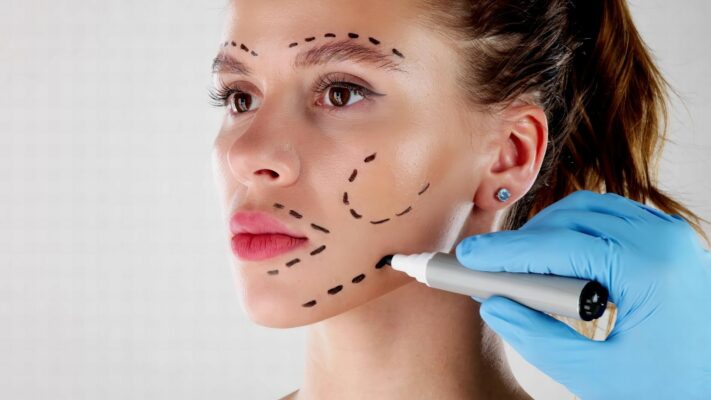
Most Preferred Countries for Plastic Surgery
Among the most preferred countries for plastic surgery, Turkey, South Korea, the United States, and [...]
Read More
21
Jan
Jan
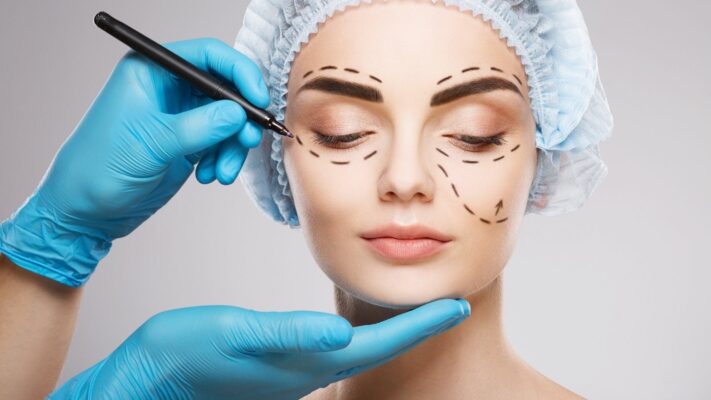
Plastic Surgery Prices
Plastic surgery prices vary depending on the type of procedure, geographical location, the surgeon’s experience, [...]
Read More
21
Jan
Jan
Physical Therapy Prices
Physical therapy prices vary depending on the number of sessions to be applied, the treatment [...]
Read More
21
Jan
Jan

Dental Treatment Prices
Dental treatment prices vary depending on the type of procedure to be performed, the quality [...]
Read More
21
Jan
Jan
Most Preferred Countries for Dental Treatments
Among the most preferred countries for dental treatments are Turkey, Hungary, Mexico, and Thailand. These [...]
Read More
21
Jan
Jan