
 Türkçe
 Deutsch
 Français
Urology treatments are the complete set of medical and surgical methods aimed at resolving structural problems or functional disorders involving the urinary tract (kidneys, bladder, ureters) and the male reproductive system (prostate, testes). These approaches aim to preserve organ function, relieve symptoms, and improve the patient’s quality of life. Current management strategies, leveraging modern technology (such as endoscopy, lasers, and robotic surgery), focus on providing the least invasive solutions tailored to each individual’s anatomy and health status.
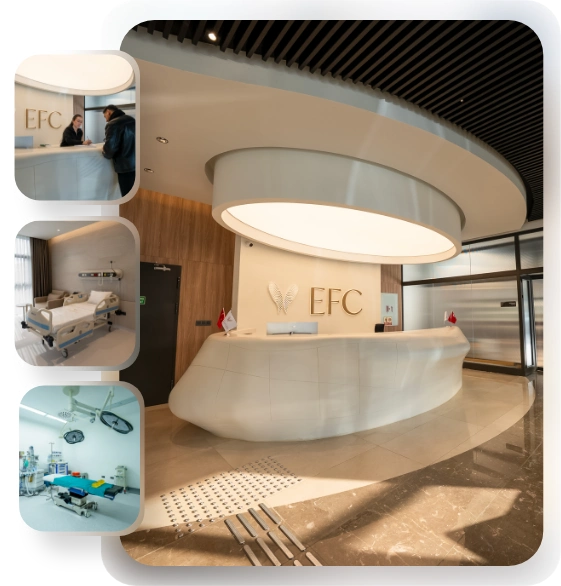
EFC CLINIC
Comprehensive Care: From Initial Consultation to Follow-Up.
EFC CLINIC is a center of excellence specializing in the most meticulous fields of surgical medicine, from aesthetic surgery to interventional treatments—where every step progresses with refined attention. Medical excellence, aesthetic precision, and uncompromising ethical standards converge on the same path. Our subspecialty-trained experts aim to achieve natural and reliable results by delivering evidence-based care supported by modern imaging, standardized protocols, and safety systems. From consultation to recovery, your care is coordinated end-to-end with clear communication, transparent planning, and genuine respect for your health.
What Are Urologic Cancers, and How Are Current Cancer Treatments Applied?
Urologic oncology deals with cancers of the genitourinary system organs such as the prostate, bladder, kidney, and testis. Treatment is determined meticulously according to the type and stage of the cancer and the patient’s overall health status.
Which Current Approaches Are Used in Prostate Cancer Treatment?
Prostate cancer management varies greatly depending on how advanced the disease is (localized or spread) and the patient’s overall health condition.
Which Factors Affect the Treatment Decision?
When planning treatment, especially in older patients, the focus is not solely on the cancer. The patient’s overall health status, “frailty,” and life expectancy are at least as important as the cancer stage. Using specific assessment scales (such as Geriatric-8), patients are classified as “fit” (eligible for standard treatment), “vulnerable” (requiring adapted treatment), or “frail” (eligible for palliative treatment aimed only at relieving symptoms). The treatment decision is made according to this individual status.
What Is the Difference Between Active Surveillance and Watchful Waiting?
Not every prostate cancer requires immediate treatment.
Active Surveillance: This is a preferred method for low-risk or selected intermediate-risk patients with a life expectancy of more than 10 years. The goal here is curative (aimed at recovery) but is to avoid the side effects of unnecessary treatment (urinary incontinence, erectile problems) for a slow-growing cancer. The patient is closely monitored with a predetermined program (PSA, examination, MRI, and re-biopsy if necessary). If the cancer shows signs of progression, curative treatment is initiated.
Watchful Waiting: This is a palliative (relief-oriented) strategy generally applied to patients with a shorter life expectancy or “frail” patients. The aim is to withhold treatment until symptoms appear and to minimize the side effects of hormone therapy.
Has the Treatment Approach Changed in Advanced-Stage Prostate Cancer?
Yes, a critical paradigm shift is occurring in this field. In metastatic (spread throughout the body) prostate cancer, the standard of care is Androgen Deprivation Therapy (ADT), which suppresses the male hormone (testosterone).
However, current AUA (American Urological Association) guidelines recommend that a tissue biopsy be obtained before initiating ADT in patients presenting with advanced-stage disease. While biopsies were not performed in advanced disease in the past, this tissue is now needed for “molecular characterization.” The purpose of this biopsy is to determine whether the patient is eligible for “biomarker-dependent” therapies (i.e., targeted/smart drugs). For example, patients with specific genetic mutations such as BRCA may benefit from targeted treatments called PARP inhibitors.
What Is PSMA-Targeted Radioligand Therapy (Smart Atom Therapy)?
This is a very new form of treatment, also known as “theranostics.” Most prostate cancer cells have a protein called Prostate-Specific Membrane Antigen (PSMA) on their surface:
Radioligand Therapy (RLT) uses a carrier molecule that binds to PSMA like a “key.” A radioactive isotope is attached to the end of this “key.” When the drug is administered intravenously, this smart molecule circulates through the body, finds only cancer cells that have PSMA, locks onto them, and delivers the radiation it carries directly into the cancer cell. The FDA-approved agent is Lutetium-177–PSMA-617 (LuPSMA). It is used in patients for whom standard chemotherapy and hormone therapies have failed.
What Are Focal Therapy (FT) Methods in Prostate Cancer?
Focal therapy is an evolving approach that fills the gap between Active Surveillance and radical treatment in which the entire prostate is removed. Thanks to advances in imaging (Multiparametric MRI) and targeted fusion biopsies, the location of the tumor within the prostate can be mapped precisely. The goal is to destroy only the known cancerous lesion in order to minimize the side effects of radical treatment (urinary incontinence, sexual dysfunction).
The main focal therapy techniques used are:
- Cryotherapy (Freezing)
- HIFU (High-Intensity Focused Ultrasound)
- IRE (Irreversible Electroporation – Electrical shocks)
Which Methods Are Used in Bladder Cancer Management?
Bladder cancer treatment is fundamentally divided into two categories depending on whether the cancer has reached the muscular layer of the bladder (i.e., whether it is invasive).
What Is the Treatment for Non–Muscle-Invasive (Superficial) Bladder Cancer (NMIBC)?
These cancers are on the inner surface of the bladder. The main treatment is TURBT (Transurethral Resection of Bladder Tumor). Under anesthesia, the bladder is reached via the urinary channel using a specialized instrument (resectoscope), and all visible tumors are endoscopically “shaved” and removed.
In low-risk tumors, a single dose of intravesical chemotherapy within the first 24 hours after surgery prevents shed cancer cells from re-implanting.
However, in T1 (abutting the muscle layer) tumors, a Repeat TURBT for a “second look” 4–6 weeks after the first surgery is a critical step mandated by guidelines. The reason is that the depth of the tumor may not have been fully understood in the initial surgery and there is a risk of residual tumor.
In high-risk superficial bladder cancer, BCG (attenuated tuberculosis vaccine) therapy that stimulates the immune system against cancer is administered intravesically in weekly courses.
What Is the Treatment for Muscle-Invasive Bladder Cancer (MIBC)?
If the cancer has reached the muscle layer (MIBC), treatment is more aggressive. The standard of care is Neoadjuvant Chemotherapy (preoperative chemotherapy) followed by Radical Cystectomy surgery. Radical cystectomy is the removal of the bladder, surrounding lymph nodes, and adjacent organs (the prostate in men, the uterus in women).
Contact us now to get detailed information about our treatments and procedures and to schedule an appointment!
Which Surgical Options Are Available in Kidney Cancer?
For localized (non-metastatic) renal cell carcinoma (RCC), the only effective curative (healing) treatment is surgery.
Surgical Standards: Partial or Radical?
The goal in modern surgery is “nephron-sparing surgery,” meaning preserving kidney function. European Association of Urology (EAU) guidelines strongly recommend Partial Nephrectomy (removal of only the tumor) for T1-stage tumors (generally <7 cm). This preserves healthy kidney tissue. Radical Nephrectomy (removal of the entire kidney) is preferred only when the tumor is very large or partial nephrectomy is not technically feasible.
How Is Robotic-Assisted Partial Nephrectomy (RAPN) Performed?
RAPN is the gold standard in many centers for small renal masses. In this method, 3–5 small (keyhole) incisions are made in the abdominal area and robotic arms are inserted. The surgeon controls these arms under a 3D and magnified view.
The most critical part of the operation is placing a temporary clamp on the main vessels supplying the kidney to stop blood flow (“warm ischemia”). In this bloodless environment, the surgeon uses the high precision provided by the robotic arms to carefully separate and remove the tumor from normal kidney tissue. Then, the cavity formed in the kidney is repaired with special suturing techniques (renorrhaphy). As soon as the repair is complete, the clamp is released and the kidney is reperfused. To prevent kidney damage, it is vital to keep this “ischemia time” as short as possible (generally under 25 minutes).
What Is the First Step in Testicular Cancer Treatment?
A solid mass detected in the testis is considered malignant until proven otherwise and is managed accordingly.
How Should the Initial Surgical Intervention Be Performed?
Before any treatment, including surgery, blood must be drawn to measure serum tumor markers (AFP, hCG, LDH).
The procedure is Radical Inguinal Orchiectomy. The surgery is performed via an incision in the inguinal (groin) region. Transscrotal orchiectomy (i.e., making an incision through the scrotum) is contrary to oncologic principles and is strongly discouraged because it increases the risk of tumor seeding. Entering through the groin incision, the spermatic cord is identified and, without touching the tumor, is ligated and divided at the level where it exits the abdomen.
Further treatment is determined based on the postoperative pathology type (Nonseminoma or Seminoma) and stage.
Which Diseases Does Endoscopic Urology Treat?
Endourology is a subspecialty dealing with “closed” (endoscopic) manipulation of the urinary tract. This means treating urinary stones and obstructions such as benign prostatic enlargement by entering through the natural urinary opening (urethra) or through a small hole made from the back (percutaneous).
Which Endoscopic Treatments Are Used for Kidney and Ureter Stones?
Stone treatment is determined according to the size of the stone and its location in the kidney or ureter.
What Are the Guideline Recommendations for Stone Treatment?
As a general rule, for ureteral stones smaller than 10 mm, ESWL (Extracorporeal Shock Wave Lithotripsy) or URS (Ureteroscopy – endoscopic surgery) are first-line options. For ureteral stones larger than 10 mm, URS is recommended.
For kidney stones, the situation is as follows.
- Kidney stones 10–20 mm: URS (Flexible Ureteroscopy) or PCNL (Percutaneous Nephrolithotomy) are first-line.
- Kidney stones larger than 20 mm: These stones are considered “large,” and clearly the first-line treatment is PCNL (endoscopic surgery performed via the back).
How Is URS (Laser Ureteroscopy) Performed?
Using a very thin flexible (flexible) or rigid endoscope (camera), the surgeon passes through the urethra and bladder and advances retrograde into the ureter (urinary channel) or up to the kidney. The stone is found under direct vision. Using a Holmium laser fiber, the stone is either pulverized (“dusting”) or fragmented (“fragmentation”). If necessary, fragments are removed with a small device called a “basket.”
What Kind of Surgery Is PCNL (Percutaneous Nephrolithotomy)?
This is the preferred procedure (gold standard) for complex or large kidney stones (>20 mm). Under general anesthesia, with the patient usually in the prone position, the surgeon makes a small incision of about 1 cm on the patient’s back/flank area. Under ultrasound or X-ray guidance, a needle is advanced into the kidney’s collecting system (calyx). This tract is then dilated to allow the passage of a sheath. A video camera (nephroscope) is inserted into the kidney through this sheath. Stones are visualized directly and fragmented using laser, ultrasonic, or pneumatic lithotripter probes, and the fragments are removed.
Which Methods Exist in the Treatment of Benign Prostatic Hyperplasia (BPH)?
BPH is the enlargement of the prostate with age, compressing the urinary tract.
What Are the Options for Medical (Drug) Treatment?
In moderate/severe symptoms, first-line treatment is medications.
Two main drug groups are used.
- Alpha-blockers (e.g., Tamsulosin)
- 5-Alpha Reductase Inhibitors (5-ARI) (e.g., Finasteride)
Alpha-blockers relax the muscles in the prostate and bladder neck, providing immediate relief of urinary flow. 5-ARI group drugs work by shrinking the prostate, and their effects begin after 6 months.
When Is Surgery Required?
Surgery is required when medical therapy fails or when serious complications develop, such as recurrent urinary tract infections, inability to urinate (acute retention), bladder stones, or BPH-related renal failure.
What Is TURP (Transurethral Resection of the Prostate)?
TURP is a method that has long been considered the “gold standard” in BPH surgery. A resectoscope (an instrument with a camera and an electrically powered wire loop) is introduced through the urethra. The enlarged inner part of the prostate (adenoma) that obstructs the urinary tract is “shaved” off using this electrical loop. Today, “Bipolar” technology is used. This technology uses isotonic saline as the irrigation fluid, eliminating the serious risk of “TUR syndrome” that could be seen with older “Monopolar” systems.
Contact us now to get detailed information about our treatments and procedures and to schedule an appointment!
What Kind of Method Is HoLEP (Holmium Laser Enucleation)?
HoLEP is a modern enucleation (shelling-out) procedure recommended especially for large prostates (>80 g). Instead of “shaving” as in TURP, a high-energy Holmium laser fiber is used. The surgeon uses the laser to anatomically separate the prostate adenoma (the enlarged inner tissue) completely from the surgical capsule (outer shell).
These large prostate lobes separated from the capsule are pushed into the bladder. Then, using a separate instrument called a “morcellator,” these tissues are broken into small pieces within the bladder and aspirated (suctioned) out. Because the entire obstructing tissue is removed, the risk of regrowth is very low, and the removed tissue can be sent for pathological examination.
Which Male Health Problems Does Andrology Deal With?
Andrology is the urology subspecialty dealing with male sexual dysfunction (erectile dysfunction, Peyronie’s disease) and male infertility.
What Are the Treatments for Erectile Dysfunction (ED)?
After evaluation, guidelines emphasize “shared decision-making” with the patient.
The treatment steps used are:
- Oral Pharmacotherapy (PDE5 Inhibitors)
- Intracavernosal Injections (ICI)
For men who do not respond to oral medications (Sildenafil, Tadalafil, etc.), ICI (direct injection of medication into the penis) is highly effective.
Surgical Management: What Is a 3-Piece Inflatable Penile Prosthesis (IPP)?
IPP, for medically refractory ED (not responding to pills or injections), is the “gold standard” surgical treatment. This system consists of three parts: two inflatable cylinders placed inside the penis, a fluid reservoir placed under the abdominal wall, and a pump placed inside the scrotum. The patient uses the scrotal pump to transfer fluid from the reservoir to the cylinders, achieving a fully rigid erection.
How Is Peyronie’s Disease (Penile Curvature) Corrected?
Treatment is initiated after the disease has stabilized (the curvature has stopped progressing).
Treatment options are:
- Intralesional Collagenase (CCH) Injections
- Tunical Plication (Correction with sutures)
- Plaque Incision with Graft (Correction with a patch)
- Penile Prosthesis (IPP) Implantation
CCH is an enzyme injection into the plaque for patients with stable disease who do not have erectile problems. Among surgical options, plication (placing sutures on the shorter side) is used for simpler curvatures, while grafted (patched) repairs are for more complex deformities. For patients with Peyronie’s disease accompanied by refractory ED (erectile dysfunction), the preferred treatment is IPP placement.
How Is Male Infertility Evaluated and Treated?
The aim of the evaluation is to identify correctable conditions, genetic abnormalities, and candidates for assisted reproductive technology (ART) treatment.
Which Genetic Tests Are Considered Necessary?
In cases of azoospermia (no sperm in the semen) or severe low sperm count, certain tests are requested.
- Karyotype analysis (Chromosome analysis)
- Y-chromosome microdeletion analysis
Men actively seeking fertility should never be prescribed exogenous testosterone therapy, because it stops sperm production.
What Is MicroTESE Surgery?
In azoospermic (no sperm in semen) men, sperm can be obtained surgically for use with IVF (ICSI). In non-obstructive (production-related) azoospermia, MicroTESE is the gold standard method. In this surgery, testicular tissue is magnified 25 times using an operating microscope, and the fuller tubules (tubules) most likely to contain sperm production are identified and sampled.
Which Conditions Do Female Urology and Neurourology Cover?
This field deals with voiding dysfunctions (urinary incontinence, overactive bladder) and pelvic floor disorders (organ prolapse) in women and men.
Which Surgical Methods Are Available for Stress Urinary Incontinence (SUI)?
SUI is involuntary urine leakage with physical exertion such as coughing, sneezing, or laughing.
The main surgical options are:
- Mid-Urethral Slings (MUS)
- Autologous Fascial Pubovaginal Slings (PVS)
MUS is the most commonly used, least invasive surgical option for SUI and involves placing a synthetic mesh strip at the mid-portion of the urethra (urinary canal). PVS, on the other hand, uses the patient’s own tissue (autologous fascia) to create the sling. This procedure is a preferred approach for recurrent SUI or for patients who do not want synthetic mesh.
How Is Medication-Refractory Overactive Bladder (OAB) Treated?
OAB is a syndrome characterized by urgency, frequent urination, and urgency urinary incontinence. When medical therapies fail, “third-line” procedural treatments come into play.
Intradetrusor OnabotulinumtoxinA (Botox): This is the injection of Botox directly into the bladder muscle (detrusor) via a cystoscope (camera) in an office setting. It chemically blocks the overactivity of this muscle. Its effect lasts 6–9 months and must be repeated. Its most important risk is urinary retention and the need for the patient to perform self-catheterization (CIC).
Sacral Neuromodulation (SNM) (Bladder Pacemaker): This is a two-stage surgical procedure that functions like a “pacemaker for the bladder.” First, under local anesthesia, a temporary test electrode is placed at the S3 sacral nerve root (coccyx). The patient uses an external test device for 1–2 weeks. If the test is successful (>50% improvement in symptoms), a permanent “battery” (Implantable Pulse Generator) is implanted subcutaneously in the upper buttock.
Percutaneous Tibial Nerve Stimulation (PTNS): This is the least invasive option. Near the medial malleolus (inner ankle bone), a small needle electrode is placed percutaneously to stimulate the posterior tibial nerve. This nerve shares the same pathway as the sacral nerves that control the bladder. A mild stimulation is applied for 30 minutes. This procedure must be repeated once a week for 12 weeks, followed by monthly maintenance sessions.
How Is Pelvic Organ Prolapse (POP) Surgery Performed?
POP is the prolapse of one or more vaginal compartments (bladder, uterus, or rectum).
Surgical options are divided into two categories.
- Reconstructive Procedures
- Obliterative Procedures
Sacrocolpopexy is the most commonly preferred reconstructive procedure. It uses a mesh to attach the vaginal apex to the sacrum (tailbone) and can be performed robotically. Colpocleisis is an obliterative procedure involving partial or complete closure of the vagina. It is highly effective for prolapse treatment, but because it makes sexual intercourse impossible, it is suitable only for individuals who are not sexually active.
How Is Urethral Stricture (Urinary Canal Stricture) Treated?
Urethral stricture is the narrowing of the urinary canal due to scar tissue (scar).
The main treatment methods used are:
- Endoscopic Treatment (Dilation/DVIU)
- Urethroplasty (Open Reconstruction)
Endoscopic methods (dilating the stricture or incising it internally) may be tried for first-time, uncomplicated, and short strictures, but the recurrence rate is high. Urethroplasty is the definitive surgical reconstruction recommended for recurrent or long strictures. In this open surgery, the narrowed urethral segment is reconstructed, often using a buccal mucosa graft (patch) taken from inside the mouth.
Blog Posts
Most Preferred Countries for Hair Transplantation
Among the most preferred countries for hair transplantation are Turkey, India, South Korea, and Poland. [...]
Read More
21
Jan
Jan

Hair Transplant Prices
Hair transplant prices vary depending on the technique to be used, the number of grafts, [...]
Read More
21
Jan
Jan
Most Preferred Countries for Plastic Surgery
Among the most preferred countries for plastic surgery, Turkey, South Korea, the United States, and [...]
Read More
21
Jan
Jan

Plastic Surgery Prices
Plastic surgery prices vary depending on the type of procedure, geographical location, the surgeon’s experience, [...]
Read More
21
Jan
Jan
Physical Therapy Prices
Physical therapy prices vary depending on the number of sessions to be applied, the treatment [...]
Read More
21
Jan
Jan

Dental Treatment Prices
Dental treatment prices vary depending on the type of procedure to be performed, the quality [...]
Read More
21
Jan
Jan
Most Preferred Countries for Dental Treatments
Among the most preferred countries for dental treatments are Turkey, Hungary, Mexico, and Thailand. These [...]
Read More
21
Jan
Jan