
 Türkçe
 Deutsch
 Français
Empress and Emax crowns are an all-ceramic restoration system produced from reinforced lithium disilicate glass-ceramic material, containing no metal substructure and replicating the optical properties of a natural tooth exactly. Thanks to its high light translucency, it delivers the most natural results in aesthetic dentistry, especially in smile design applications. With excellent biological compatibility, these special ceramics integrate with the tooth structure thanks to both their durability and crystallized structure, offering a long-lasting aesthetic solution that does not discolor over time and does not create a gray reflection.
EFC CLINIC
Comprehensive Care: From Initial Consultation to Follow-Up.
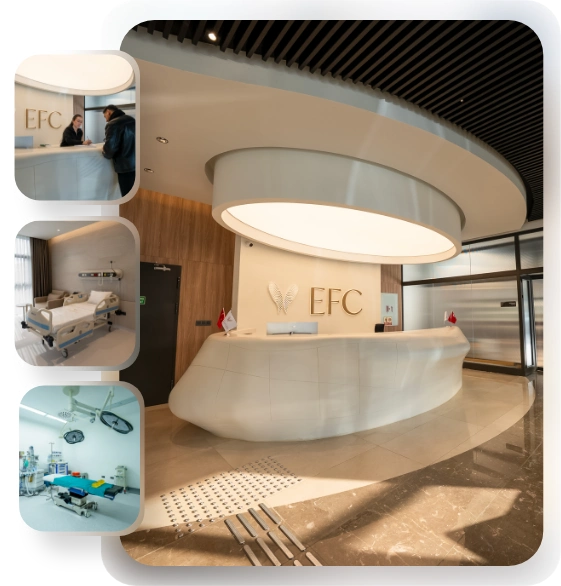
EFC CLINIC is a center of excellence specializing in the most meticulous fields of surgical medicine, from aesthetic surgery to interventional treatments—where every step progresses with refined attention. Medical excellence, aesthetic precision, and uncompromising ethical standards converge on the same path. Our subspecialty-trained experts aim to achieve natural and reliable results by delivering evidence-based care supported by modern imaging, standardized protocols, and safety systems. From consultation to recovery, your care is coordinated end-to-end with clear communication, transparent planning, and genuine respect for your health.
What are Empress and Emax crowns?
Although these two names are actually brands, they represent a very special group of materials known in the dental world as “lithium disilicate.” You can think of this material as a combination of the aesthetics of glass and the durability of ceramic. In the past, when making porcelain teeth, we had to place a gray-colored metal support underneath to provide durability. No matter how much we tried to hide this metal, it blocked the passage of light, causing the tooth to look somewhat matte and dull. Also, when gum recession occurred over time, that unwanted gray line would appear.
With Empress and Emax technology, the situation is completely different. These ceramics in block form are compressed and crystallized under high pressure and heat. The resulting structure is entirely ceramic and contains no metal. In this way, light filters through the crown and replicates exactly the semi-translucent, depth-rich appearance of natural tooth enamel. The result is a lively, non-artificial-looking, and “bio-mimetic,” meaning nature-imitating, smile.
For which dental problems are these restorations suitable?
Lithium disilicate systems are our greatest helper especially in cases where aesthetic concern is at the forefront. They are indispensable for treatments we call “Smile Design,” in which the tooth form most suitable for the person’s face is created.
The situations in which this treatment is frequently preferred are as follows:
- Severely discolored teeth
- Teeth with shape deformities
- Chipped or cracked tooth edges
- Worn tooth surfaces
- Darkening due to root canal treatment
- Diastema (gapped teeth)
- Old fillings with compromised aesthetics
- Congenital (birth) tooth deficiencies
As you can see in the list, we can confidently use this material in many scenarios where we want to correct the color, form, or position of the tooth. Especially in the anterior teeth, if our patient’s aesthetic expectation is very high and they want a result that cannot be distinguished from a natural tooth, our first choice is generally these systems.
Contact us now to get detailed information about our treatments and procedures and to schedule an appointment!
Are these aesthetic-looking teeth really durable?
One of our patients’ biggest concerns is whether a material that looks so thin and glass-like will break. Although this concern may seem justified at first glance, material science provides us with very strong data on this matter. Lithium disilicate is not a simple porcelain. Its internal structure is strengthened through special firing processes.
When we look at scientific tests, we see that these blocks have very high flexural strengths ranging between 160 MPa and 400 MPa. These figures may sound technical, but in everyday terms; they are more than sufficient to withstand normal chewing forces in the mouth. However, durability is not only related to the material itself. When these crowns are bonded to the tooth, they integrate with the tooth thanks to special adhesives and move as a single unit. This “monoblock” structure minimizes the risk of fracture.
Should I choose Emax or Zirconium?
This is the question we encounter most often in the clinic. Both are metal-free, white, and aesthetic materials, but their areas of use differ. Zirconium, by nature, is a more opaque material with lower light translucency but higher fracture resistance. Emax, on the other hand, has much higher light translucency and superior aesthetic properties, but its flexural resistance is slightly lower compared to zirconium.
We can make this distinction as follows: if you are going to have your front teeth done and your primary goal is “naturalness,” lithium disilicate (Emax) delivers unquestionably better aesthetic results. Because it replicates the translucency of the natural tooth exactly. However, if work will be done on your posterior molars, if you have missing teeth, and long bridges need to be made, we may prefer the durability of zirconium since chewing forces will be very high. As your dentist, we help you make the most accurate choice between these two materials according to the distribution of forces in your mouth and your aesthetic needs.
What are the treatment process and stages?
Emax or Empress applications require meticulous planning and precise work. The process is usually completed in 2 or 3 sessions and takes about 1 week.
The main stages of the treatment are as follows:
- Detailed clinical examination
- Photo and video recordings
- Local anesthesia application
- Tooth preparation (reduction)
- Precise impression taking
- Application of temporary restorations
- Laboratory production process
- Try-in appointment
- Adhesive cementation (bonding)
After your teeth are prepared in the first session, your temporary teeth are fitted immediately. In this way, you do not experience tooth sensitivity while waiting for the laboratory process, and you continue your social life with an aesthetic appearance. During the laboratory stage, our technicians craft the form and shade most suitable for your face with micron-level precision. In the final session, we perform our try-in and, with your approval, proceed to the permanent bonding procedure.
Contact us now to get detailed information about our treatments and procedures and to schedule an appointment!
Will my teeth be cut a lot during this procedure?
In modern dentistry, a “minimally invasive” approach is essential. In other words, preserving tissue is our priority. The greatest advantage of lithium disilicate materials is that they can show high durability even at very thin thicknesses (for example, 0.3 mm – 0.5 mm). This feature allows us to remove very little tooth structure.
For old-type crowns, it was necessary to reduce nearly 2 mm from all surfaces of the tooth. However, now, sometimes it is sufficient to make a millimetric adjustment only on the front surface of the tooth, staying within the enamel boundaries. In fact, in some suitable cases, we can perform the procedure with almost no preparation at all (non-prep). Preserving tooth enamel is critical not only for the health of the tooth but also for the retention of the crown. Because our adhesives achieve the strongest bond to enamel tissue. Therefore, the less your tooth is cut, the stronger your crown will be.
How is the bonding procedure performed so that the crowns do not fall off?
The hidden hero in the success of Emax restorations is the bonding protocol we call “adhesive cementation.” This should not be thought of like simple adhesives used at home. Here, rather than mechanical retention, there is a very strong chemical bonding.
In this process, the inner surface of the porcelain coming from the laboratory is roughened with hydrofluoric acid and a special agent called “silane” is applied. These chemicals make the glassy surface capable of accepting the adhesive. Simultaneously, the tooth surface in the mouth is etched and “bonding” agents are applied. Throughout all these stages, it is essential that the tooth is completely isolated from saliva and moisture. When the crown is seated on the tooth with a flowable filling-like material called resin cement and cured with light, the tooth and porcelain become an inseparable whole. This chemical integration not only eliminates the risk of the crown falling off but also prevents bacterial leakage.
Why are Empress and Emax prices different from others?
The cost of this treatment method is higher than traditional metal-supported porcelains. There are several main reasons for this. First, the lithium disilicate blocks used are high-technology imported materials. However, the main factor that creates the difference is the precision in the production process.
To produce these teeth, laboratories need to invest in CAD/CAM (computer-aided design and manufacturing) devices and special press furnaces. In addition, processing this material requires much more technical knowledge and artistic skill than processing metal porcelain. From the dentist’s perspective, every stage from impressions to bonding demands much more time, meticulousness, and expertise. In other words, the fee paid is not just a material cost; it is the value of advanced technology, precise workmanship, and long-term aesthetic success.
What should be considered to extend the lifespan of the crowns?
After the treatment, you can use your crowns like your own teeth. Lithium disilicate is highly resistant to staining thanks to its surface properties. Tea, coffee, or smoking does not affect these crowns as much as it yellows natural teeth because the surface is glass-like and smooth.
Still, some points you should pay attention to are as follows:
- Regular tooth brushing
- Daily flossing
- Avoiding shelled foods
- Quitting the habit of biting pens
- Quitting the habit of nail-biting
- Using a night guard
- Six-month dental check-ups
Especially if you have a teeth clenching (bruxism) problem, using a night guard will extend the life of the crowns for years. In addition, cracking hard-shelled nuts with the front teeth can damage your crowns just as it can fracture a natural tooth. With good oral hygiene and regular check-ups, you can use your Emax crowns for 15–20 years and even longer without problems.
Blog Posts

Most Preferred Countries for Hair Transplantation
Among the most preferred countries for hair transplantation are Turkey, India, South Korea, and Poland. [...]
Read More
21
Jan
Jan

Hair Transplant Prices
Hair transplant prices vary depending on the technique to be used, the number of grafts, [...]
Read More
21
Jan
Jan
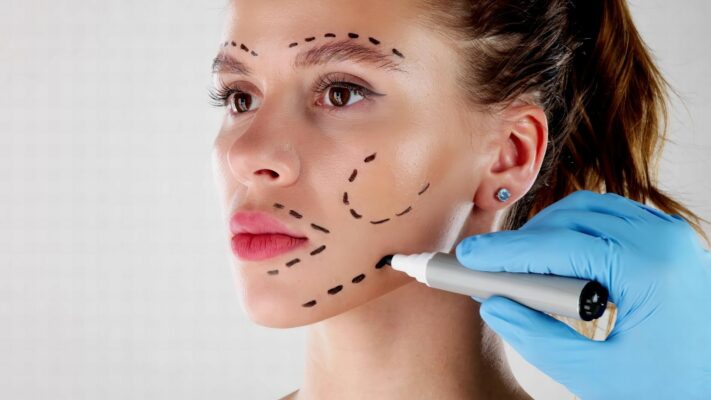
Most Preferred Countries for Plastic Surgery
Among the most preferred countries for plastic surgery, Turkey, South Korea, the United States, and [...]
Read More
21
Jan
Jan
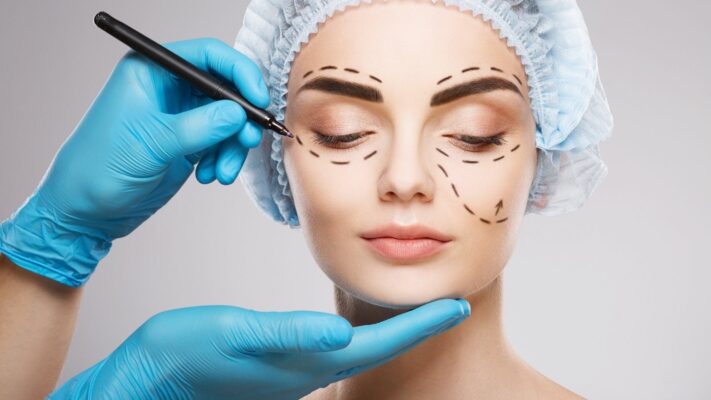
Plastic Surgery Prices
Plastic surgery prices vary depending on the type of procedure, geographical location, the surgeon’s experience, [...]
Read More
21
Jan
Jan

Physical Therapy Prices
Physical therapy prices vary depending on the number of sessions to be applied, the treatment [...]
Read More
21
Jan
Jan

Dental Treatment Prices
Dental treatment prices vary depending on the type of procedure to be performed, the quality [...]
Read More
21
Jan
Jan
Most Preferred Countries for Dental Treatments
Among the most preferred countries for dental treatments are Turkey, Hungary, Mexico, and Thailand. These [...]
Read More
21
Jan
Jan